A formal commitment defining expected service standards and response times.
What is a service level agreement (SLA)?
A service level agreement (SLA) defines the service expectations agreed between a provider and its customers. Agreements between internal teams are often called operational level agreements (OLAs). In support operations, an SLA often sets targets for responding to and resolving tickets, with rules that may vary by priority or service hours.
How does an SLA work in a help desk?
The team defines measurable targets, such as the time allowed for an initial response. Tickets are evaluated against the applicable policy, and agents or managers monitor deadlines. Escalation rules can help draw attention to tickets at risk of missing a target.
Benefits of SLAs
Clear expectations: Customers and agents know the targets.
Smart prioritization: Time-sensitive requests come first.
Measurable performance: Results are easy to track against targets.
Accountability: Escalations start when targets are at risk.
How does Desk365 help manage SLAs?
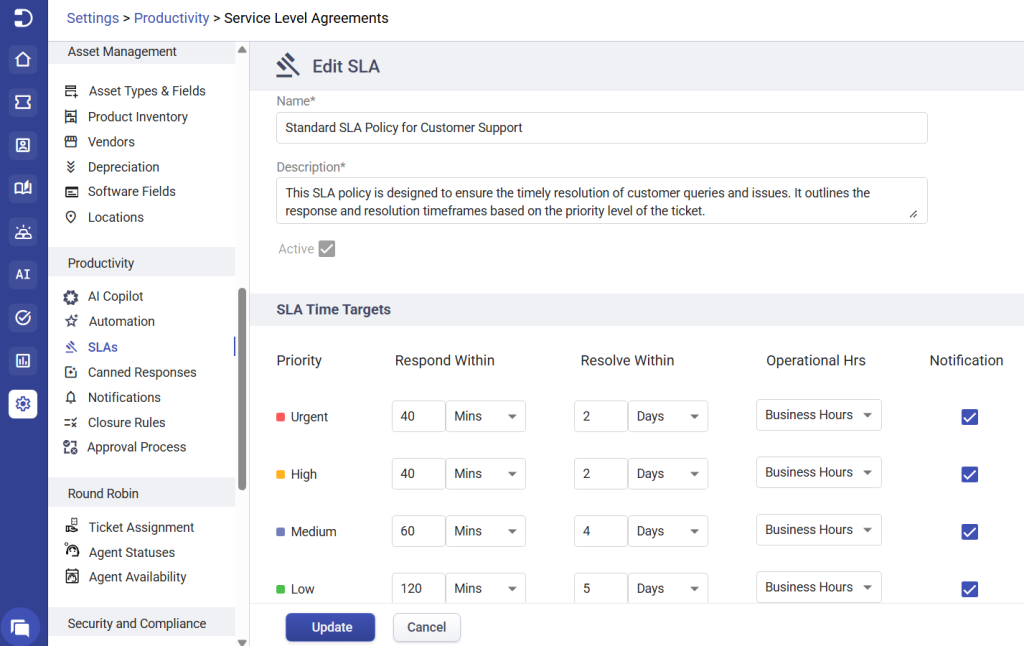
Desk365 SLA policies set a Respond Within and Resolve Within time for Urgent, High, Medium and Low tickets.
Business hours or 24×7: Run each policy on working hours or around the clock.
Reminders: Alert agents before a target passes.
Escalations: Notify chosen people by email or Microsoft Teams when a target is missed.
Company-specific SLAs: Apply a different policy to key customers or override it on a single ticket.